Posted on May 27, 2020 by Jessica -

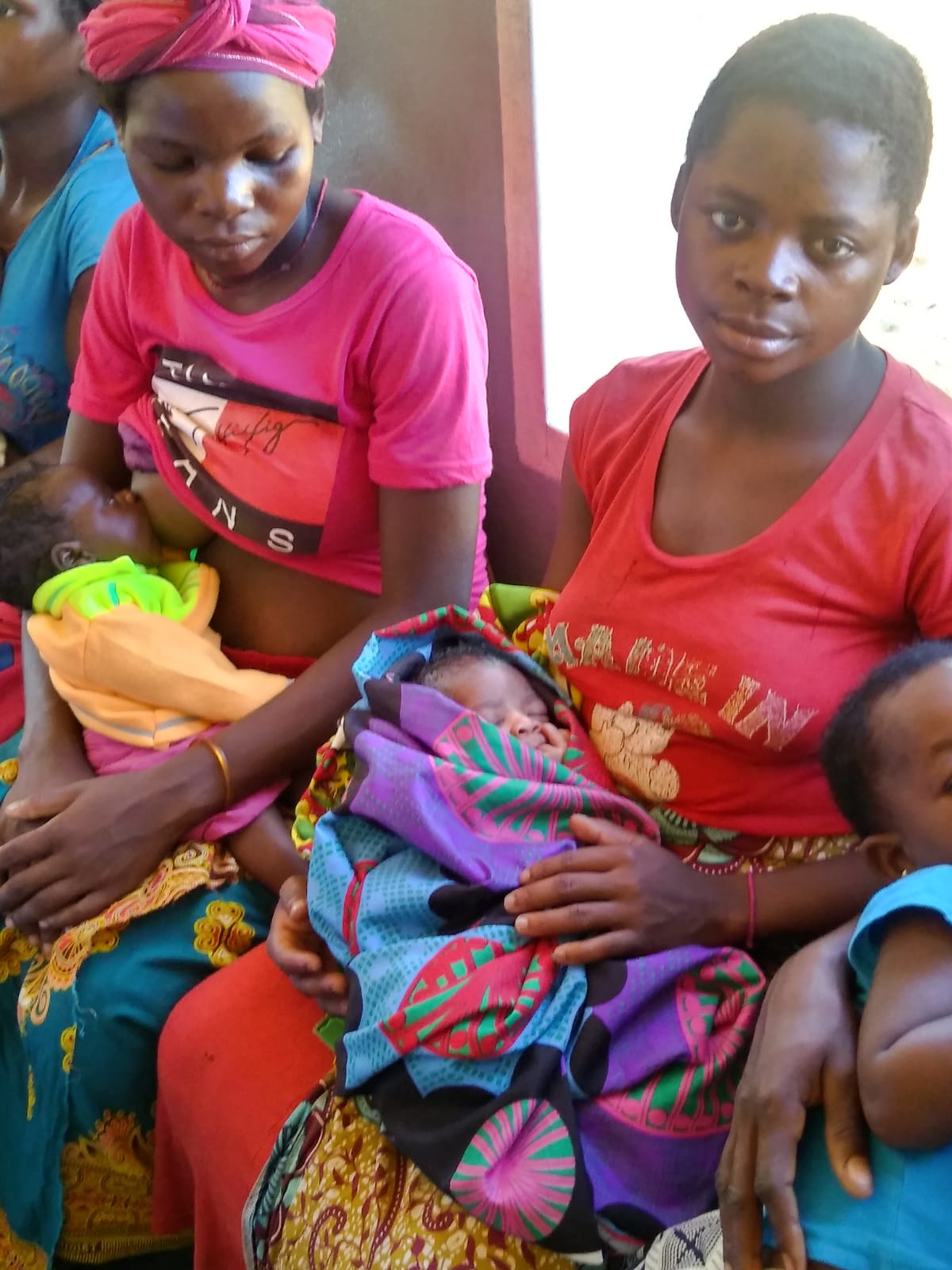
Camillians have been in the country for many years since the AIDS pandemic began and were the first ones to develop supporting programs for HIV-positive mothers and their children.
PRO.SA Foundation supports nutritional and health programs developed in the Hogars that have been built in three different places: Lima, Arequipa and Huancayo.
Nutrition is fundamental in HIV+ people’s health. At Hogar San Camillo in Lima assistance programs are implemented according to the children’s age and their HIV+ mothers’ needs and it is possible to involve the nutrition project beneficiaries. Cooking workshops that teach food preparation and conservation techniques, med and health workshops as well as psychological and personal guidance counseling sessions are held on different week days. Nutrition insurance is guaranteed to children and mothers who attend the centre during these days. The Camilos Vida project is addressed to 42 children with their mothers, whereas the Vida Feliz program is addressed to 47 of them.
The 70 children up to 11 years of age which are the target group of Hogar de Niños in Arequipa, in the foothills of the Andes, are born to HIV+ parents and therefore belong to a level of poverty and social exclusion that people with AIDS suffer. In Arequipa many families do not have access to basic services. In most cases women find out they are HIV positive when they go to the hospital to give birth. They attend Hogar de Niños with their children to enjoy a playful and educational moment, as well as to receive an appropriate meal in terms of nutrition. The weekly educational Escuela de Deberes program children are leaded by a teacher and met periodically by a psychologist. Playing and psychomotor activities are held at the centre. On a monthly basis a nutritional expert checks the children’s weight and height in order to monitor malnutrition and health levels.
15 children are currently hosted at Hogar San Camillo in Huancayo. They are welcomed for a limited period of time but long enough to implement a psychophysical improvement process. Customised treatments and nutritional support plans are aimed at make children regain their strength as they are going through a critical stage of the disease, which requires careful and specific assistance and nutrition. The project beneficiary families are economically poor and most children are under the protection of their mothers only, who have been left by their partners because of their disease or have remained widowers. Sawing workshops are held in order to enable them to generate resources to invest in their children’s sustenance and to help themselves regain dignity at the same time.
Posted on May 27, 2020 by Jessica -
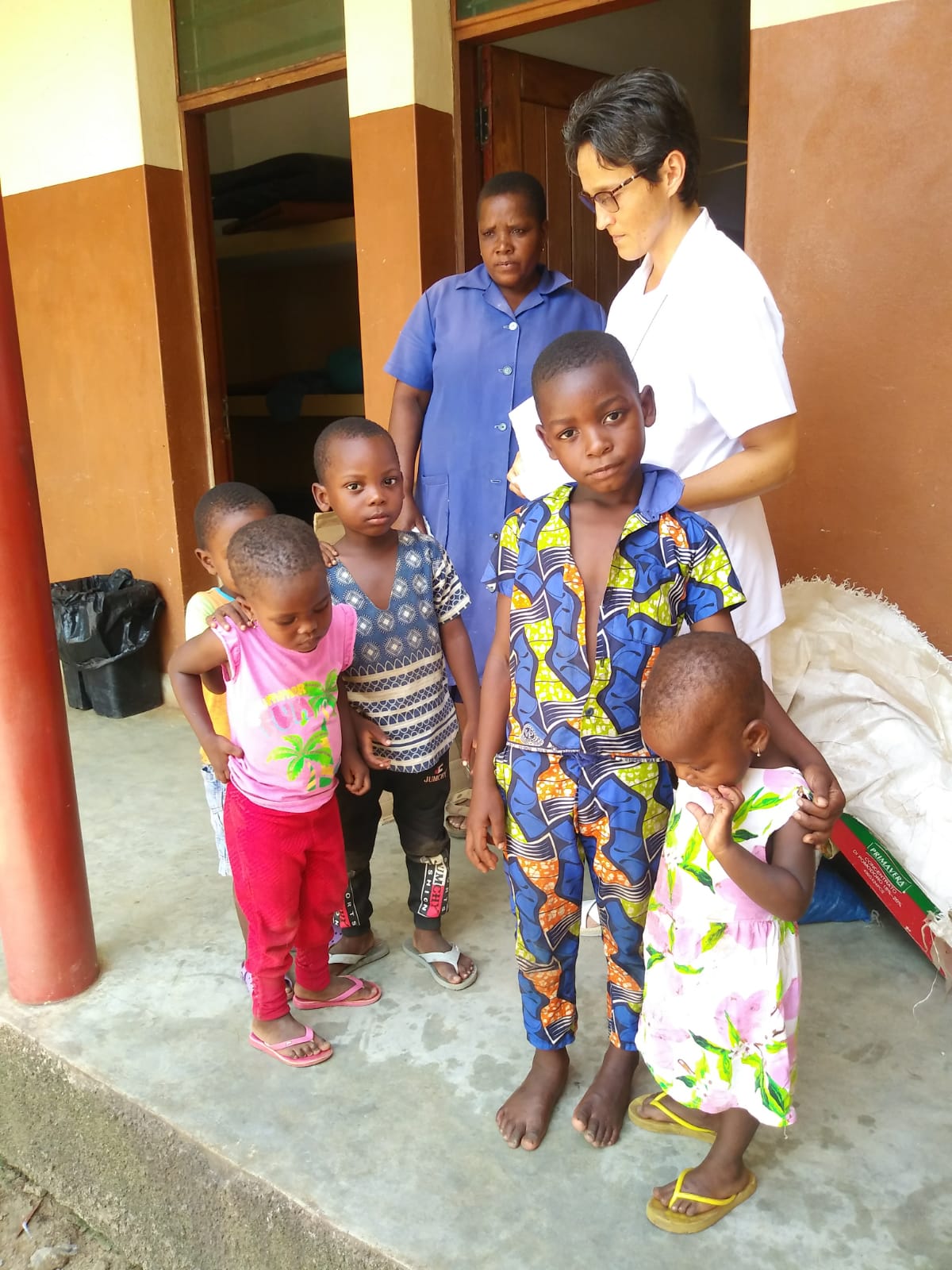
The project is developed in the San Francesco d’Assisi Health Centre in Mangunde, in the Sofala-Beira province. Mangunde is a completely rural area and can be reached only by taking a 25 km gravel road from the National Road n. 1. People live on their crops, partially destroyed by floods originated from ‘Idai’ Cyclone in March 2019.
In the Health Centre clinic more than 10.000 patients are annually taken care of and 500 people get hospitalised. 1500 people with HIV/AIDS follow a specific therapy.
The beneficiaries of the program supported by PRO.SA Foundation are on average 130 children up to 5 years old, with bad to medium malnutrition issues. 60% of their mothers are HIV positive.
The number of malnourished children has been increasing since the passage of the cyclone which has left many families without their crops, the main source of income.
Sister Carla, the Combonian missionary managing the project, screens children entering the program on a monthly basis to assess their health conditions and nutrition improvements and teaches mothers how to prepare nourishing jellies and the basic hygiene norms.
She provides them with milk powder, foods and drugs if necessary, according to the children’s age and needs. Particular attention is paid to HIV+ mothers who cannot breastfeed to avoid transmitting AIDS to their child.
This is a nutrition project that raises awareness among mothers in terms of appropriate nutrition, hygiene and health.
Posted on May 26, 2020 by adminK -

Gere is a village on the Flores island, one of the poorest in the Indonesian archipelago. Poverty is visible everywhere here, there are no factories nor companies and young people have to migrate to bigger islands to study or work. Just like in the rest of Indonesia, there is no national health care system. Malnutrition has always been among the most serious scourges on society; this is why in 2010 Camillians built a feeding centre in Bowaulong village, which could offer nutrition assistance to children with growth issues. The good results encouraged them to build another centre in Gere village in 2014. This is a very poor village in the mountains, not far from the town of Maumere and yet hardly reachable. The village’s population is made of around 1.000 families, 85% of which grow bananas, maize and vegetables. Inhabitants live in insecure houses made of bamboo, straw and coconut wood; the access to drinking water is limited and the lack of toilets facilitates the presence of insects such as mosquitos, which often bring malaria and other disease.
St. Camillus Feeding Centre is aimed at guaranteeing a proper nutrition program to 100 children aged a few months-10 years living in Gere. The centre also provides them with food, vitamins, supplements and basic drugs. Children are screened every 3 or 6 months in order to assess their malnutrition level and therefore schedule programs appropriate to each one of them.
As far as the children’s mothers are concerned, informative and educational meetings about the correct hygiene-health and nutrition practices. They are also taught how to cook nutritionally balanced meals with local products. Raising awareness on proper nutrition and a good hygienic daily routine helps prevent many diseases and disorders caused by dehydration and intestinal parasitosis. The centre offers meetings specifically focused on pregnant women as well.
Posted on May 23, 2020 by adminK -

In India, being a disabled child means bringing bad luck, being a leftover and unworthy of consideration. In India, being a disabled child’s mother means being cursed and, in most cases, ending up alone without any help, watching your child’s disease getting worse and worse day by day.
The living conditions of disabled people in India, in particular those of the female part of society, violate many basic human rights. Disabled women and girls (44% of all disabled people in India) cannot access proper medical treatments, benefit supporting services nor improve their own independence through socio-economic reintegration tools. They are therefore destined to a life of marginalisation, discrimination and suffering.
Pratikhya, which in local language means “hope”, is an accommodating centre for disabled girls with serious impairments of cognitive capacities. It is the only centre of this kind in the district of Balasore in the Orissa state. It was opened in 2000 and is currently run by the Daughters of San Camillo. The centre does not only meet the hosts’ essential needs, but also provide them with specific school courses and all services that enable disable people to reach their own potential, being it health assistance, physiotherapy, sport, yoga, etc.
Girls and women in Pratikhya all have a balanced diet and appropriate to their age and physical and health condition.
Many of them take a pharmacological therapy, which needs a particular nutritional care. In order to guarantee a balanced diet to the centre’s hosts, a €1 daily fee per person is required. The intervention beneficiaries are 41 girls with mental disability aged 2-23, who suffer from various genetic pathologies or syndromes such as Down, autism, cerebral palsy, epilepsy, intellectual disability of unknown origin. Most of them are orphans.
PRO.SA Foundation supports the purchase of rice, milk, flours, chicken, vegetables, eggs and fish, as it is prevented in the nutritional programs for both Pratikhya centre and Fr. Tezza Special School – Home for disabled children in Mananthavady, Kerala State. This school is managed by the same order of nuns and it accommodates 126 disabled girls, 64 of which live there.
Posted on May 23, 2020 by adminK -
Haiti is not only the poorest country of the American continent but together with many African countries it is in the last positions of the Human Development Index. Over half of the population still lives below the national poverty line. The conditions of underage youth is particularly concerning and that of disabled children is even more critical. Being a child in Haiti is not easy: in the last decade natural disasters, epidemics and poverty have left lots of children without parental care.
Most families live in extreme poverty and slums do not stop growing. Thousands of Haitians live in the USA, Canada or France and can somehow support the local economy, which is mainly based on the sale of essential goods, by sending remittances to Haiti.
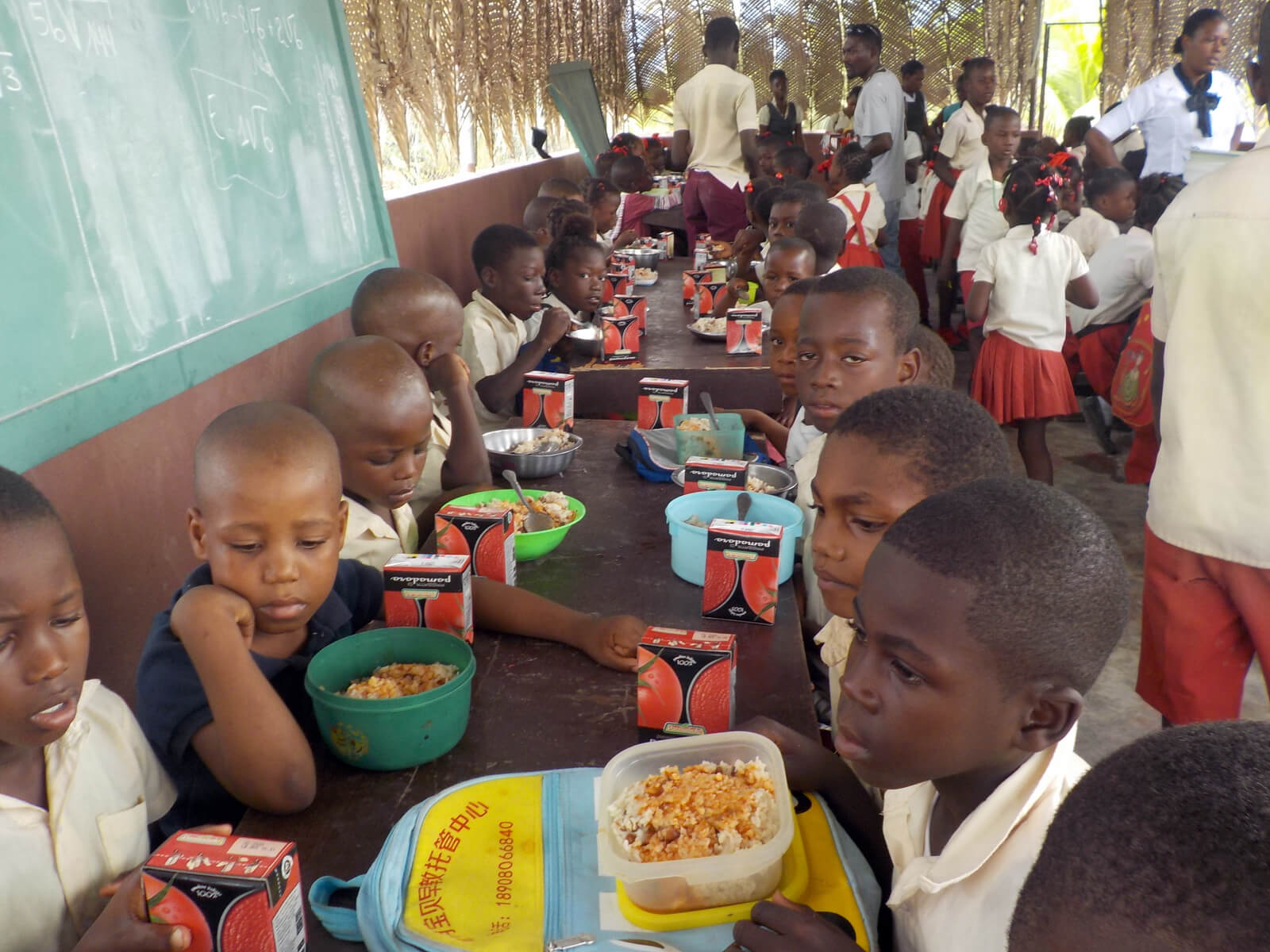
École la Providence de Sibert has 650 students from 4 to 12 years old. For most children the meal offered by the school canteen is the only one of the day. It is generally made of rice and beans, tomatoes and dried herrings, which provides the proper amount of carbohydrates and proteins, fundamental for the children’s mental and physical wellbeing.
The local community benefits from the project as well. Mothers are indeed less concerned knowing their children can eat regularly and they make sure more consciously that their children go to school. Children attending the canteen means also conveying behavioral norms towards a better community life and correct basic health care practices. Children learn to wait in line for their turn, wash their hands before eating, waiting for everyone to finish their meal before leaving the canteen and go back to class. The elders cooperate in cleaning the room and washing the dishes.
With this kind of intervention, we are fighting against child malnutrition, through educational processes and by implementing school canteen services. This is aimed at improving nutritional intake to the underaged living as marginalised and vulnerable in high nutritional unsafety or emergency contexts.
Posted on May 23, 2020 by adminK -

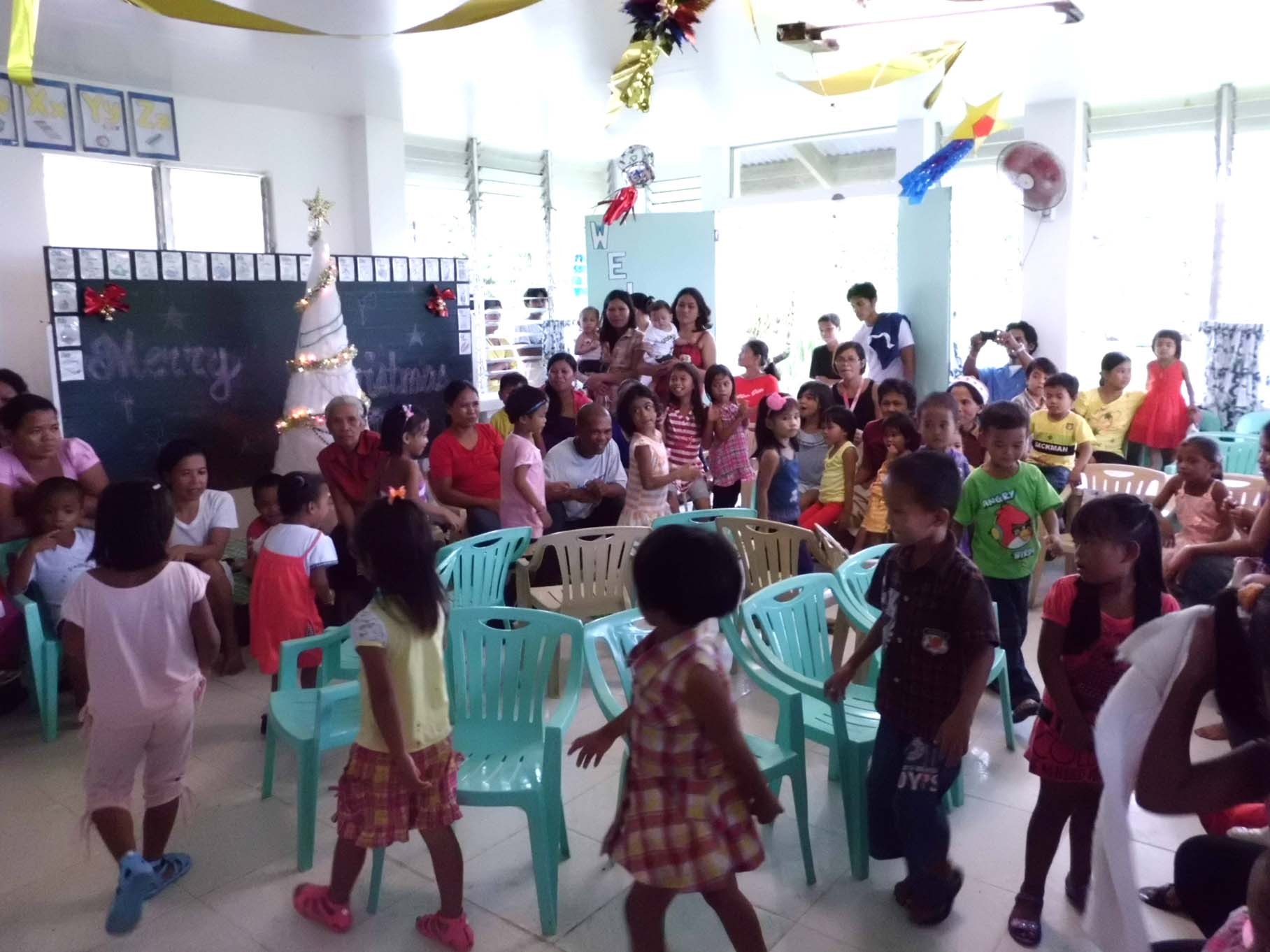
The Poor Children Nutritional Center on Samar Island, was born to give a group of around 60 children the chance to receive a proper nutrition and follow pre-school literacy courses.Children are divided into 3 classes where they are taught basic education through hygiene lessons, the alphabet and 50 words in Tagalog and English.
In order to improve their physical health and lower malnutrition cases, the centre’s canteen cooks lunch for the children every day, which is the only daily meal for many of them.
The project was developed after the numerous reports of school drop-outs during the first years of primary school. Students of local schools come from very poor families, they spend the day on the street and need to be motivated to follow the lessons. Furthermore, some children have learning disability because of their malnutrition conditions and cannot always attend school. More than 30% of children up to 5 years old suffers from stunted growth.
The fight against hunger is aimed first and foremost at guaranteeing children food and micronutrient supplies with balanced meals.
A child who is malnourished has not been provided with the fair amount of micronutrients during the 1.000 day period between conception and their second year of life and they are therefore likely to develop motor and intellectual disability. This could be a serious damage for them and the community where they live.
In spite of the literacy rate being 93.4% in the Philippines, school dropout is a scourge on society. One child out of 4 school-aged children does not go to school because of their family’s economic conditions, the distance from home and the use of a different language from their own.
Posted on May 22, 2020 by adminK -

The project is developed in the terrible reality of prisons in Ouagadougou, where Camillians give social and medical assistance to 1,500 inmates living in situations to the limits of human decency who have to take care of their own survival without any economic support. The jail provides a daily meal made of a portion of polenta. When ill, prisoners can only pay for treatments if their family are able to help them economically. Camillian missionaries have started an internal bread production cycle so that prisoners can raise their daily portion and also learn a job they will be able to do when out of jail.
Inside the bakery, every product is hand-made without the aid of machinery. Ovens are similar to those that can be found in villages but made of more durable materials. Inmates are divided into groups and take turns in learning to bake under the guidance of two paid master bakers. The baked bread does not only stay inside the jail but it is also successfully sold in town. Around 7.000 bread pieces are sold every month. The income covers 50% of the project’s costs.
The daily meal the 2.000 inmates are provided with has been supplemented with bread. A group of 10 prisoners are alternatively learning a job that enables them to reintegrate more easily once served their sentence. 4 women are selling the bread at the market and are therefore able to support their families.